

An Unexpected "Suspense": Visiting Dr. Selby Whittingham, Founder of the Turner Society
By Zhang Hongbin
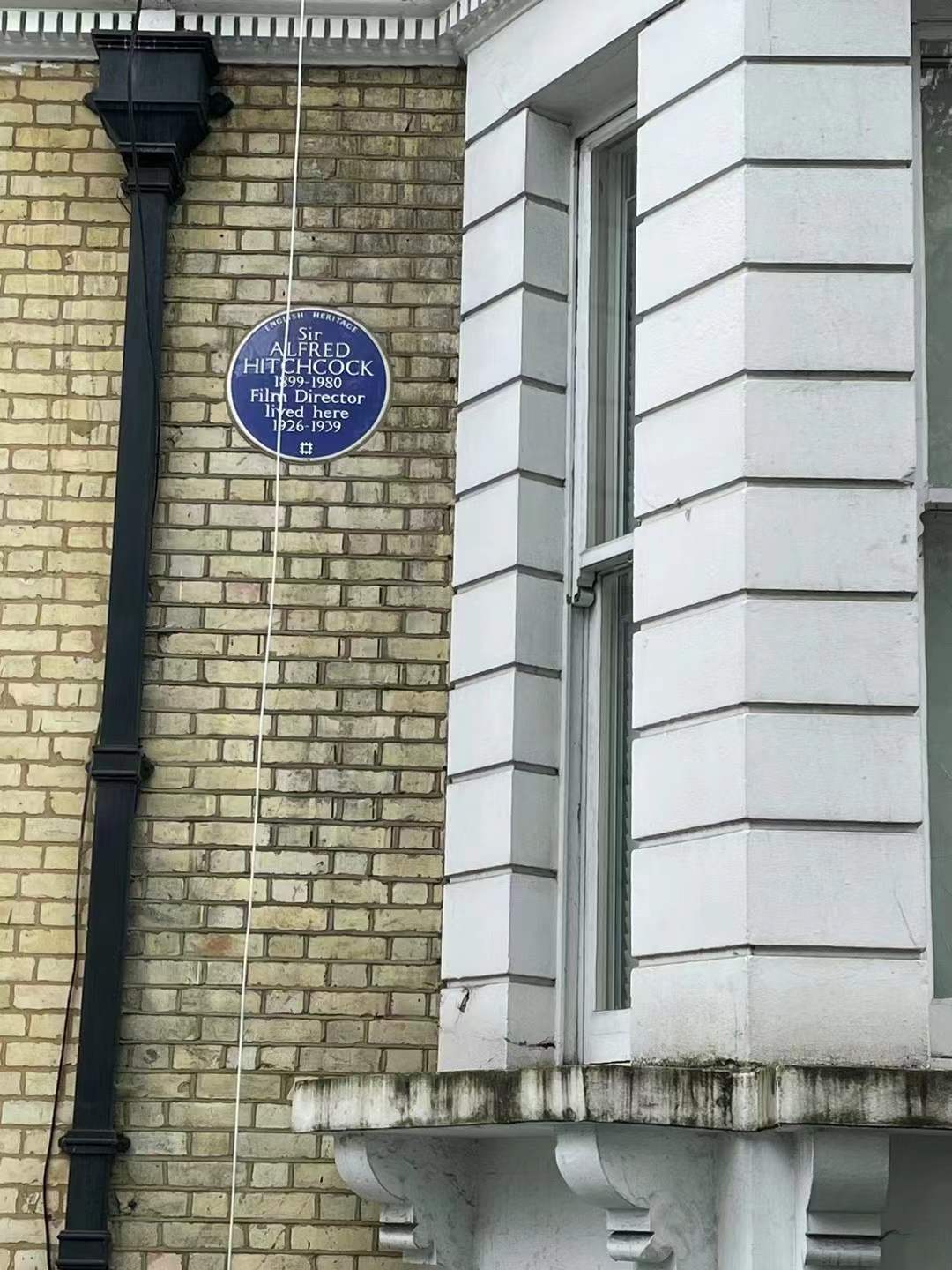
The greatest surprise and delight of any journey lies in encountering the utterly unexpected within what seems an unremarkable itinerary — a moment that leaves you half-bewildered, half-convinced you have stumbled into a dream. On this occasion, a visit to Dr. Selby Whittingham, Chairman of the Turner Society, at his London home took an extraordinary turn: we found ourselves, quite unexpectedly, "Hitchcocked" by the master of suspense himself.
A Blue Plaque, a Master of Suspense, and a Chance Encounter
Dr. Whittingham's residence is located at 153 Cromwell Road, near Earl's Court in London. Upon our arrival, a blue plaque mounted on the exterior wall immediately caught our attention. The inscription revealed that this building had once been the home of the legendary filmmaker Alfred Hitchcock, who had lived here for thirteen years — as Dr. Whittingham's neighbor, in the flat directly above. What the English call a "Blue Plaque" is a permanent marker installed by the British government at sites of cultural heritage significance, commemorating the historical associations between a location and a notable person, event, or building. What had begun as an ordinary visit between friends turned, in an instant, into something altogether more theatrical — a touch of Hitchcockian suspense that lent the occasion a wonderfully unexpected charm.
A Friendship Rooted in Conversation: How It All Began
My acquaintance with Dr. Selby Whittingham, Chairman of the Turner Society, dates to 2021, when I conducted an in-depth interview with him exploring Turner's life and artistic journey. With 2025 marking the 250th anniversary of Turner's birth, the Turner Society has been actively planning a series of commemorative events, and it was for this purpose that we were invited to London to discuss potential collaboration.
Born in Malaysia in 1941, Dr. Whittingham is one of Britain's foremost Turner scholars, the founder of the Independent Turner Society, and a senior museum adviser. He comes from a remarkable English family of distinction: his mother, Barbara Whittingham-Jones, was a prominent politician and historian, and a political ally of Prime Minister Winston Churchill; his father, Henry Rolf Oppenheim, escaped from Singapore to India by sampan alongside Australian Major General Gordon Bennett during the Second World War — an episode that became the subject of a question raised by Winston Churchill in Parliament; and his uncle, Sir Duncan Oppenheim, was an artist, Chairman of the Design Council and the Royal College of Art, and a member of the advisory committee of the Victoria and Albert Museum.
Turner: The Pioneer Who Elevated Landscape to the Status of History Painting
During our 2021 interview, Dr. Whittingham offered a profound and illuminating account of his research into Turner and his understanding of the artist's enduring significance.
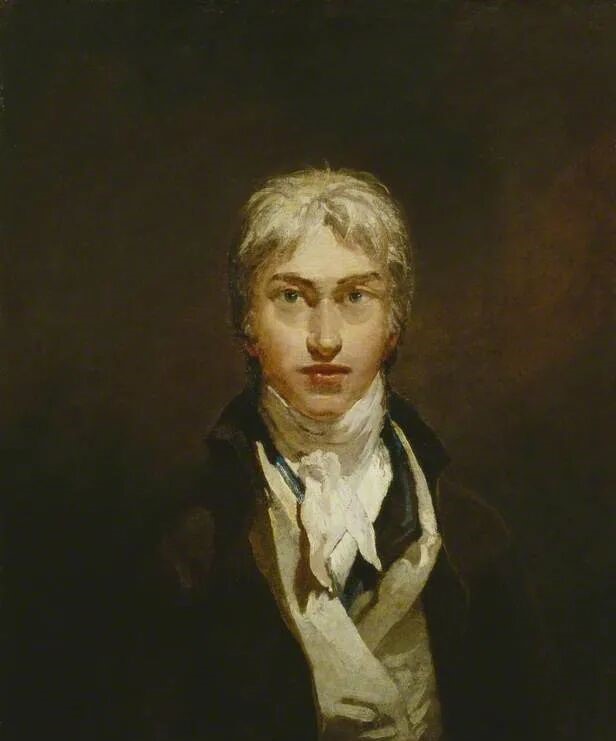
J.M.W. Turner (1775–1851) stands among the greatest painters in the history of world art, celebrated for his expressive use of color, his endlessly varied landscapes, and his turbulent, elemental seascapes. Over the course of his lifetime, he produced more than 550 oil paintings, 2,000 watercolors, and 30,000 works on paper. The Victorian art critic John Ruskin famously called him the "Father of Modern Art" — a designation rooted in what Dr. Whittingham regards as Turner's most significant historical achievement: elevating landscape painting to a level of prestige equal to that of history painting.
Turner's technique was singular and revolutionary. In his watercolors, he scraped away pigment with a palette knife and his thumb, and plunged his hand directly into a bucket of water to modulate color or wash it clean. In his oils, he applied paint with increasing transparency, evoking pure, luminous light through shimmering, vibrating color. Abandoning the precise rendering of detail that his predecessors and contemporaries still prized, he instead developed his own methods for conveying the felt sensation of nature — swirling clouds, bold arrays of color swept across the canvas. Those techniques that evoke the feeling of the "sublime" would later become the very substance and subject matter of the Abstract Expressionists.
On the question of Turner's influence on subsequent generations, Dr. Whittingham was emphatic: Turner's impact on the French Impressionists — and on Monet in particular — was considerable. Monet studied Turner's technique with great care and drew vital inspiration from it. Turner's intense preoccupation with fading light and his handling of tone not only established him as a pioneer of British painting, but left a deep and lasting imprint on the art of France as a whole.
The Knoedler Gallery: A Distinguished Fellow Guest
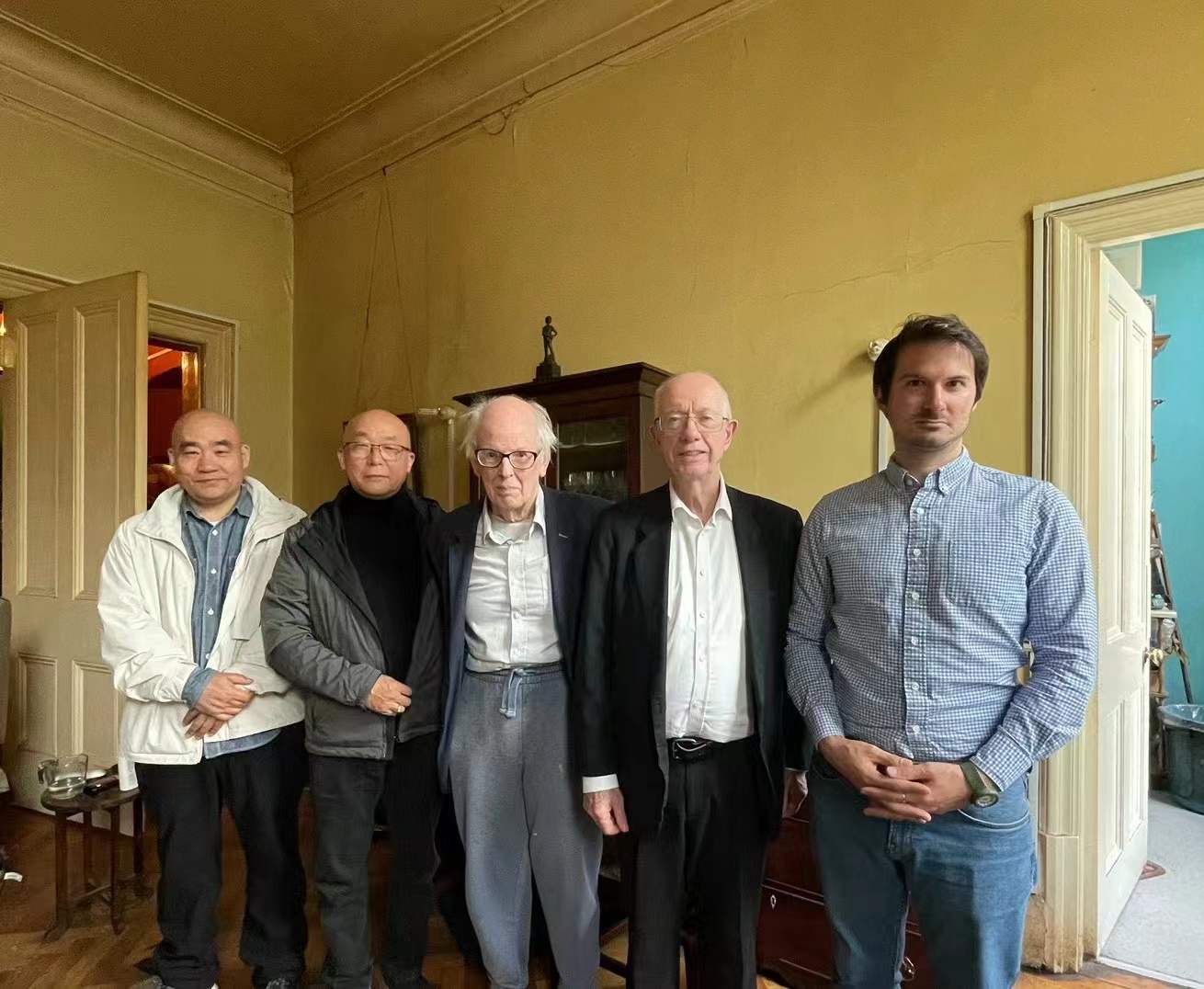
Also present at the meeting that day was a friend of Dr. Whittingham's — René Gimpel, the fourth-generation head of the Gimpel Fils Gallery, one of Europe's most distinguished art dealerships. Founded in the early twentieth century, the gallery has long been counted among the foremost dealers in European art. René's great-grandfather authored the celebrated Diary of an Art Dealer, a chronicle of his personal encounters with Renoir, Monet, Picasso, Degas, Rodin, Matisse, Rousseau, and many other masters of the age, maintained continuously for twenty-one years across the two World Wars. The diary remains to this day an indispensable primary source for the study of modern art history and the collecting of art during that turbulent period.
The 250th Anniversary of Turner's Birth: A Greater Mission
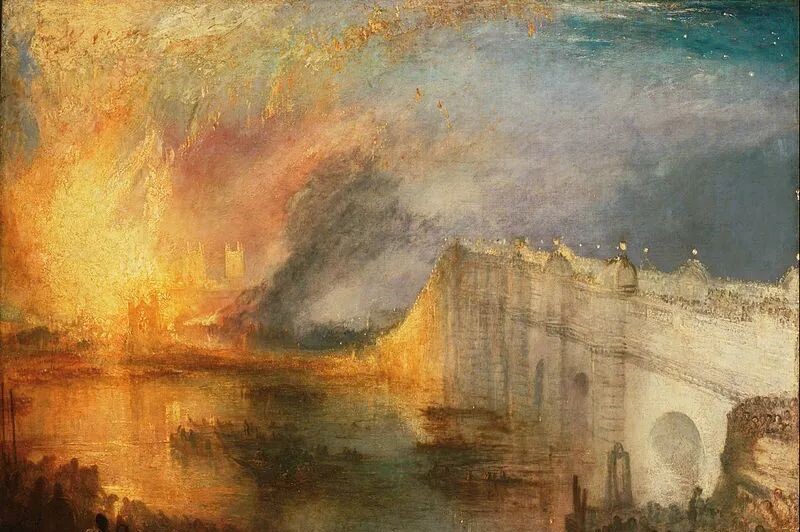
Beneath the surface of this London visit lay a cultural mission of far greater scope. With 2025 marking the 250th anniversary of Turner's birth, the Independent Turner Society is actively planning a series of global commemorative events. As the curatorial team behind the Le Venezie International Watercolor Festival, we hope to join forces with this authoritative institution of Turner scholarship to build a genuine platform for cross-civilizational dialogue — one that allows Turner's "aesthetics of the sublime" to find new vitality within a contemporary, globalized world, and that enables Chinese watercolor art to make its voice heard more powerfully on the international stage at this historic moment.
As Dr. Whittingham himself observed in our interview, Turner's works have yet to receive the full understanding and appreciation they deserve. Everything we are doing is in service of a single aspiration: to let more people see the light that has been shining across two centuries — and to ensure that it shines on.