

When Watercolor Meets Monotype: A Special Masterclass at the Fourth Le Venezie International Watercolor Festival
If an overseas art exchange amounts to nothing more than visiting museums, galleries, and outdoor sketching sites — without any genuine intention to explore the local historical traditions and cultural character of a place — then it inevitably remains somewhat superficial. Most people who have visited Venice will have made their way to St. Mark's Basilica, the Accademia, the island of Murano, and other celebrated landmarks. But it is safe to say that very few have ever set foot in the once-renowned "Venice International School of Graphics."
This time, the organizing committee of the Fourth Le Venezie International Watercolor Festival opened that little-known door for the Chinese watercolor artists in attendance.
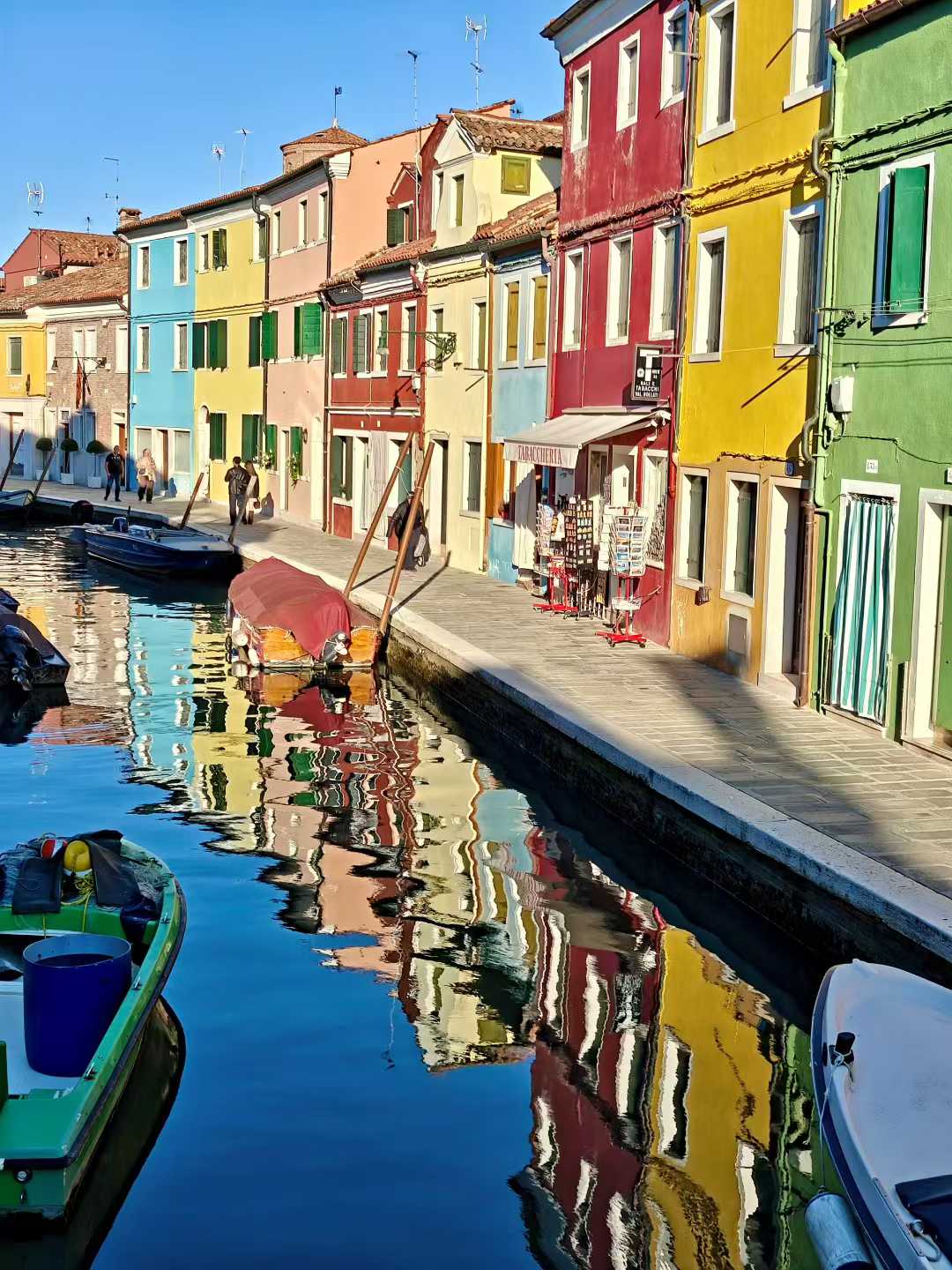
Stepping Inside the Venice International School of Graphics
The Venice International School of Graphics is one of the most important centers for printmaking education in Italy and across Europe, offering instruction in a wide range of traditional and contemporary printmaking techniques. Venice, as a great hub of art and printing during the Renaissance, provided extraordinarily fertile ground for the development of watercolor monotype — and yet, for all its prestige, the school remains largely unknown to most Chinese artists.
It was precisely with this in mind that the organizing committee made a special arrangement: a visit to the school and a hands-on printmaking workshop were incorporated into the artistic exchange program of this year's festival. The intention was to ensure that this Italian journey would be more than an exhibition — that it would become a genuinely immersive encounter with a living cultural tradition.
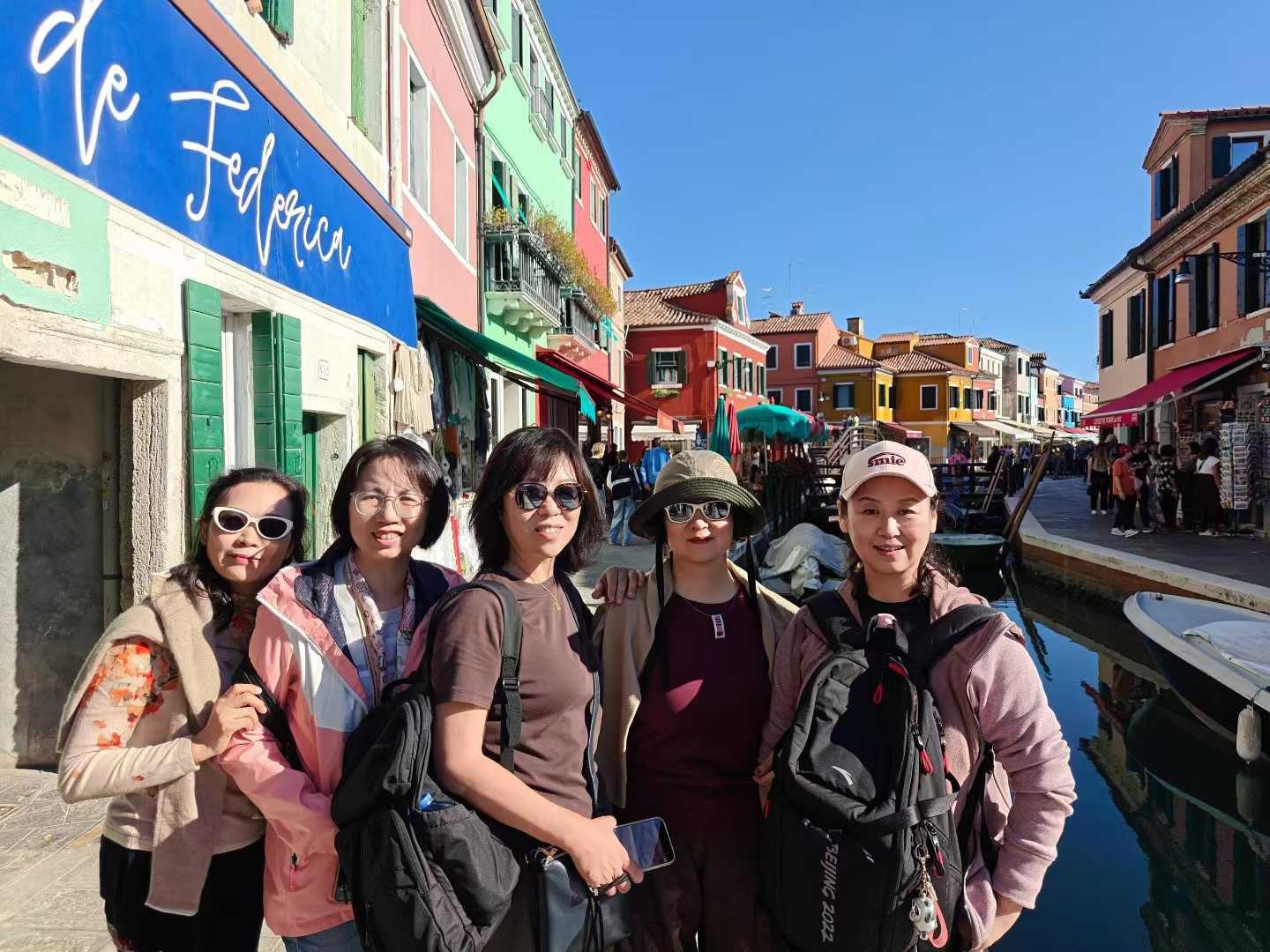
Monotype: An Ancient Technique Beloved by the Masters
Monotype is a printmaking form that has been held in the highest regard by artists across every era. In the seventeenth century, Rembrandt's monotypes were defined by their dramatic interplay of ink and shadow. In the eighteenth century, British watercolor monotypes were shaped by the deep influence of Venice. And in the nineteenth century, the Impressionist master Degas, following his travels in Venice, produced a series of monotypes — most famously his Venice Landscape — that bear unmistakable traces of the Venetian watercolor tradition, standing as a classic instance of the meeting between Eastern and Western visual languages in art history.
The particular allure of monotype lies in its irreproducibility. Every work is unique. The way pigment flows, bleeds, and transfers across the plate yields a quality of accidental beauty that no other medium can replicate — and in this, it shares a deep spiritual kinship with watercolor art, which likewise embraces the unpredictable movement of water and the beauty of the unplanned.
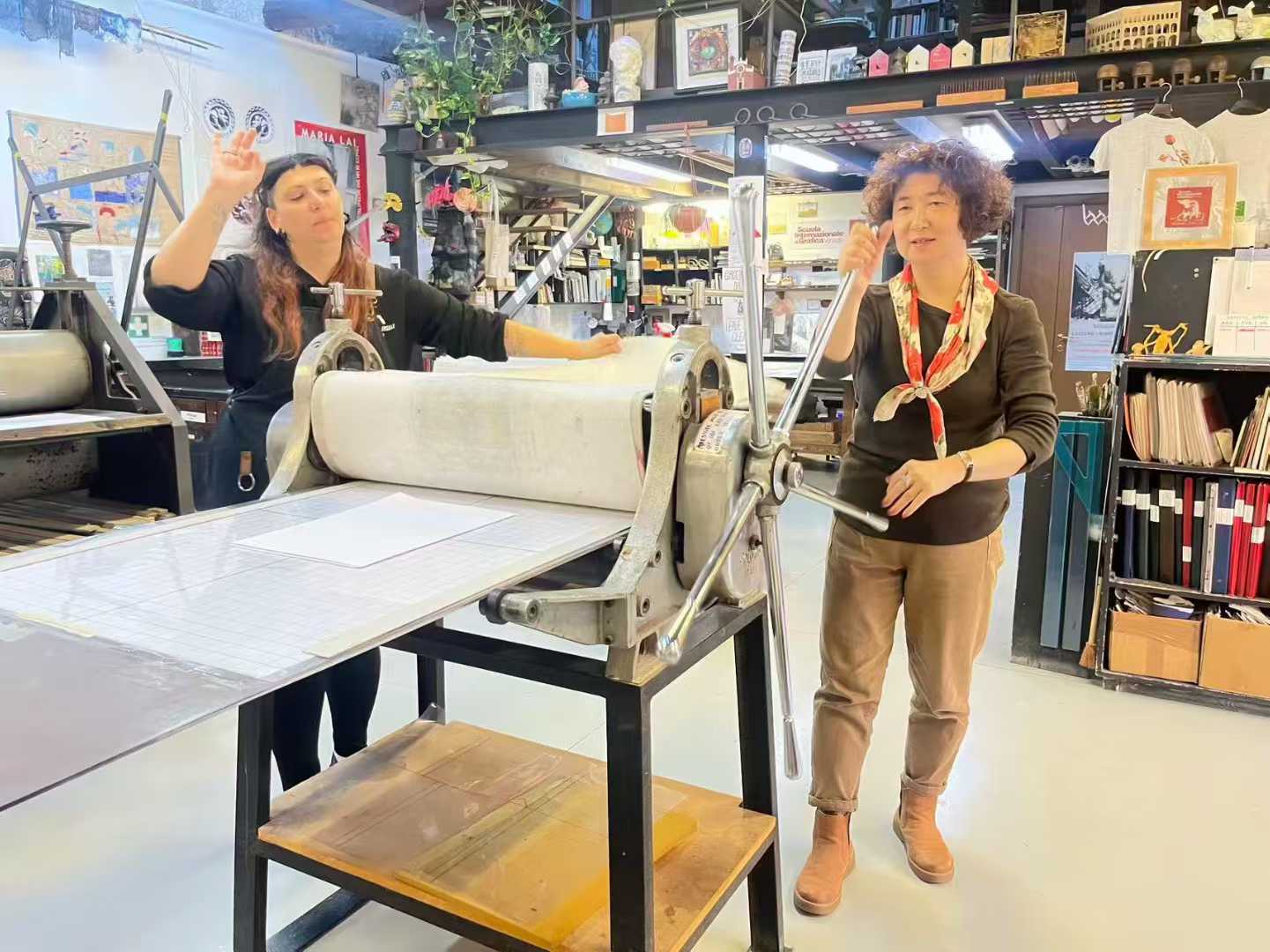
Transforming Plein Air Sketches into Monotypes, Under Italian Expert Guidance
At the heart of this workshop was a genuine act of creative transformation. Under the on-site guidance of Italian printmaking specialists, the participating Chinese watercolor artists took their own plein air sketches made in Venice and used traditional techniques to render them as monotypes — each one a singular, unrepeatable work of art.
For artists long immersed in the language of watercolor, this was an entirely new sensory experience. Watercolor demands control of water and the transparent layering of color; monotype, by contrast, asks the artist to engage with the medium in a far more intuitive, more physically immediate way — the viscosity of the ink, the resistance of the plate, the unknowable instant of transfer together create a creative tension quite unlike anything else. To take the light and water of Venice and render them anew through the very printmaking tradition that this city has prided itself on since the Renaissance is, in itself, a conversation that reaches across centuries.
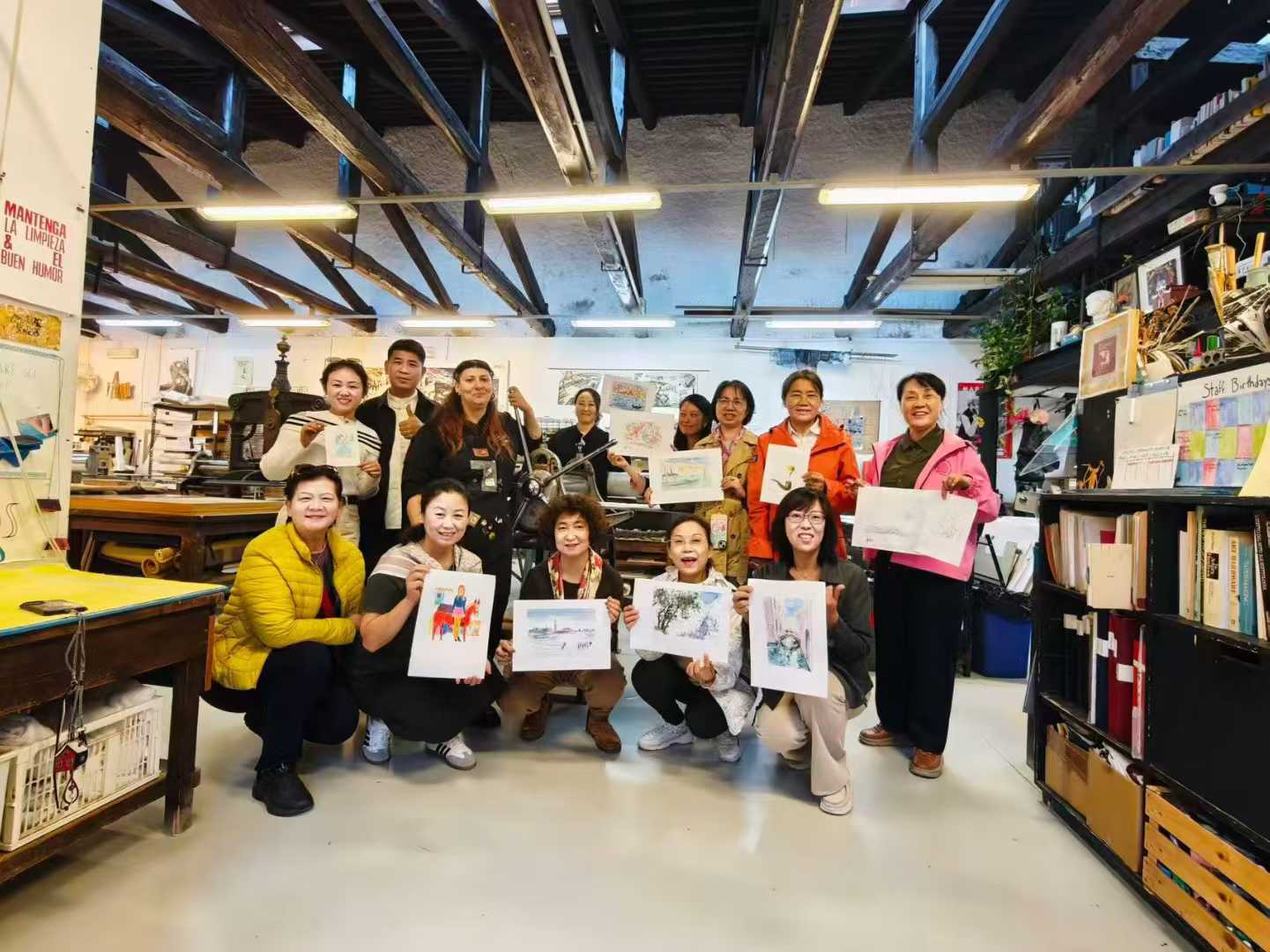
Deep Exchange Is the True Meaning of an Artistic Journey
This visit to the Venice International School of Graphics may have been just one episode within the broader program of the festival, yet it stands as one of its most unforgettable moments. It reminds us that genuine artistic exchange of real depth has never been simply a matter of hanging works on a gallery wall and receiving applause. Only by entering the historical fabric of a city — by touching the cultural soil from which it has grown — can one truly begin to understand why the light here is different from the light anywhere else, and why the waters of Venice have, for five hundred years, continued to nourish some of the greatest artists the world has ever known.
The Fourth Le Venezie International Watercolor Festival is richer, and more resonant, for having offered this particular lesson.