

"Heritage and Expedition: The Memory and Contemporaneity of Watercolor"--Thematic Interpretation of the 4th Le Venezie International Watercolor Festival 2026
By Zhang Hongbin and Ji Yinglun
Preface: The Bicknell Family and the Genesis of the Theme
The 4th Le Venezie International Watercolor Festival 2026 is organized around the theme "Heritage and Expedition: The Memory and Contemporaneity of Watercolor." This framing is conceived as an act of commemoration — honoring Elhanan Bicknell (1788–1861), one of the most consequential British art patrons and collectors of the nineteenth century, and his descendant Clarence Bicknell (1842–1918). By retracing the contributions of this family across two generations, the Festival seeks to illuminate a fundamental truth: that the inheritance and flourishing of watercolor art have never rested on the talent of individual artists alone, but are deeply embedded in a broader cultural ecology — one sustained by patronage, collecting, scientific inquiry, and humanistic vision working in concert.
Elhanan Bicknell was among the most influential art patrons of the Victorian era. His sustained commitment to J.M.W. Turner was especially remarkable. As one of the foremost private collectors of Turner's work, he assembled a substantial body of oils and watercolors with systematic purpose, while also providing the artist with a stable creative environment through ongoing acquisition, social advocacy, and cultural promotion — support that extended well beyond the purely financial. What distinguished Bicknell's patronage was its active, interventionist character: wealth generated through maritime trade and the whaling industry was channeled not merely into purchase, but into a genuine engagement with Turner's creative choices and thematic direction. At a time when watercolor had yet to achieve full parity with oil painting in critical and institutional esteem, it was precisely patrons of Bicknell's caliber — wielding both capital and cultivated taste — who materially elevated the medium's standing within the contemporary art world. The posthumous auction of his collection sent reverberations through the nineteenth-century British art market, cementing watercolor's value as both a significant cultural asset and a serious object of investment.
If Elhanan embodied the institutional force of advancing art through patronage, then his son Clarence Bicknell represented an altogether different tradition: understanding the world through direct practice. A naturalist, botanist, and artist, Clarence turned to watercolor as his primary instrument for recording and cataloguing thousands of Alpine wildflower specimens. These were not decorative renderings of nature but works of "visual knowledge" — grounded in meticulous fieldwork, fusing scientific observation with aesthetic sensibility and a deep reverence for the natural world. From Elhanan's expansive patronage to Clarence's exacting practice, the Bicknell family story amounts to a miniature cultural history of watercolor — one that addresses both how art is sustained and how art becomes a means of knowing the world.
It is from this depth of historical perspective that the Festival places "Heritage" and "Expedition" in dialogue, seeking to open a conversation between memory and contemporaneity.
I. Thematic Background: A Historical Retrospective from the City of Water
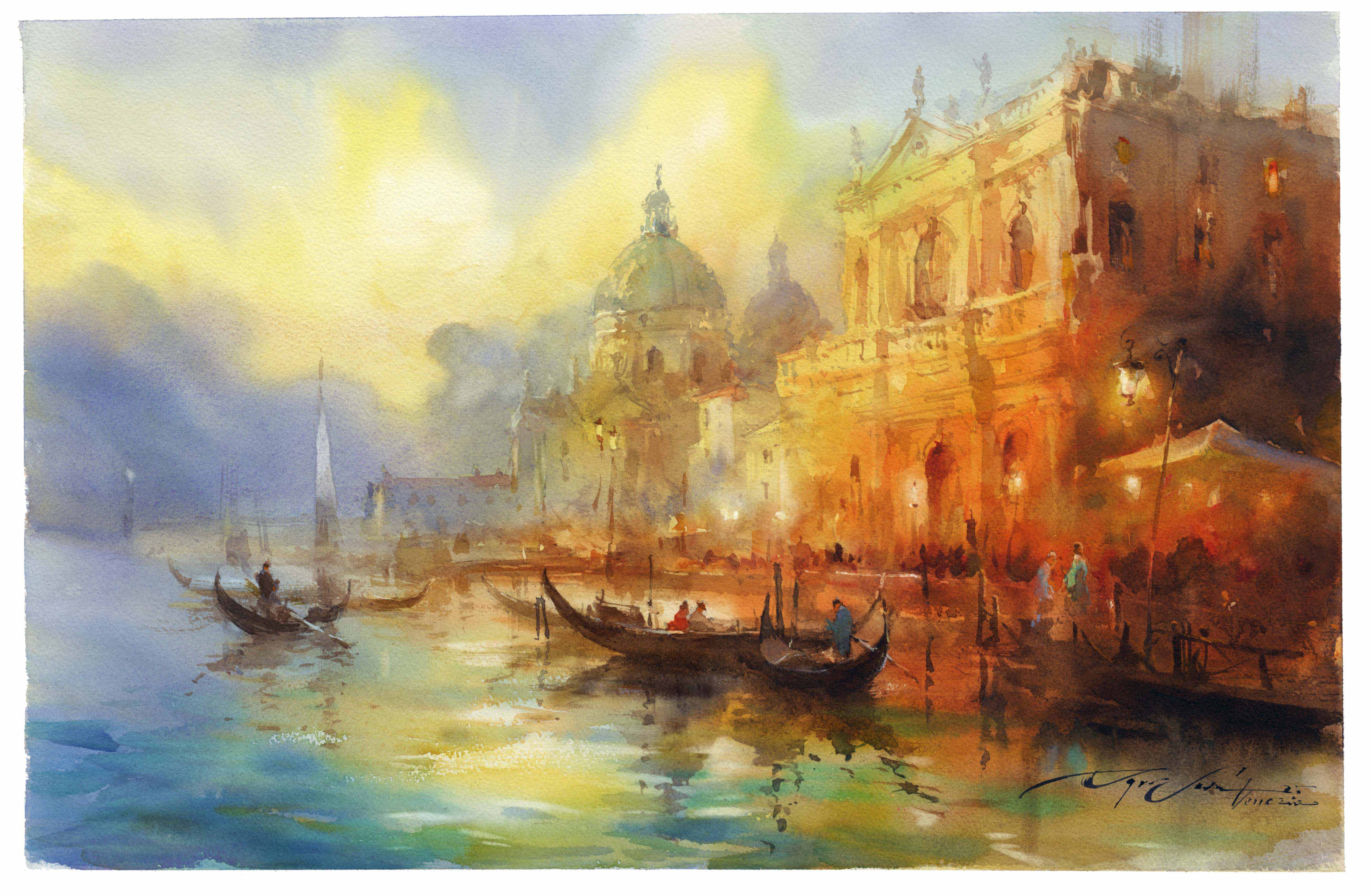
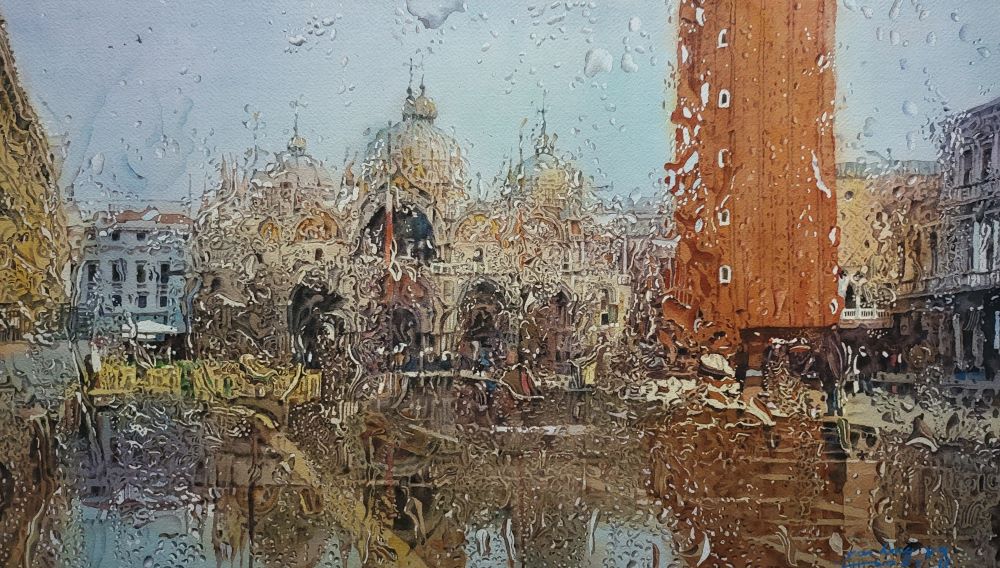
Venice — a city whose very identity and poetic imagination are inseparable from water — has served as a vital crossroads of art, science, and humanistic inquiry since the Renaissance. Watercolor, a medium whose nature is profoundly symbiotic with water itself, has a history of development that is closely intertwined with European traditions of natural exploration, travel writing, and scientific illustration. The 4th Le Venezie International Watercolor Festival, anchored by the theme "Heritage and Expedition," draws on this rich cultural inheritance to re-examine watercolor's place within historical memory, and to ask what new possibilities remain open to it within the contemporary art world.
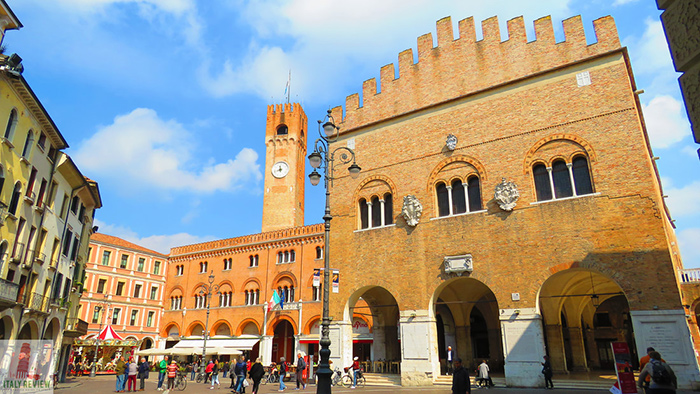
The Festival is organized by the Italian Cultural and Art Exchange Association and partner institutions, and will be held in October 2026 at the Palazzo dei Trecento, Treviso's magnificent medieval civic palace. In proposing "Heritage and Expedition" as its governing theme, the Festival understands watercolor not as a fixed and static tradition, but as an open system — one that is perpetually being inherited, revised, and rewritten. In this light, the Bicknell family story takes on a significance that reaches beyond family history: it functions as a parable, reminding us that every meaningful development in watercolor has required the convergence of three forces — the foresight of patrons, the sustained practice of artists, and the generative friction of cross-cultural encounter.
II. "Heritage": Knowledge, Nature, and Humanism in the Watercolor Tradition
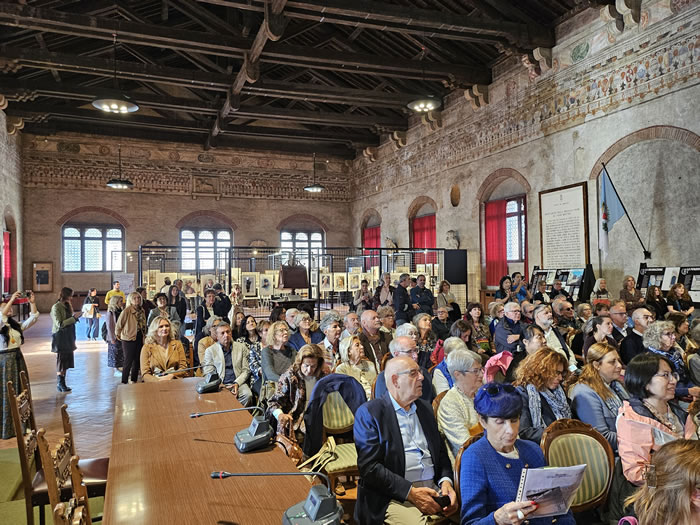
"Heritage," as invoked here, refers not simply to the perpetuation of style or technique, but to a composite tradition that spans art, science, and the humanities. It is in this broader sense that Clarence Bicknell's practice emerges as one of the Festival's most important spiritual touchstones. His watercolor records of Alpine flora were not decorative illustrations but acts of "visual knowledge" — born of sustained fieldwork, they represent an integration of scientific rigor, aesthetic expression, and wonder before the natural world. This practice reveals a dual role that watercolor has historically fulfilled: it is at once an artistic language and an instrument for comprehending the world. By exhibiting Clarence Bicknell's original Alpine botanical watercolors alongside related archival documents, the Festival foregrounds the animating spirit of the watercolor tradition: observation, recording, and understanding as inseparable acts.
Seen from a wider angle, Elhanan Bicknell's patronage and collection of Turner constitutes its own form of heritage — not merely the physical preservation of works, but the modeling of an institutional practice that actively sustains artistic production. Through acquisition, patrons set standards; through advocacy, they shape taste; through intellectual engagement, they participate in the creative process itself. In doing so, they build the kind of durable ecosystem — connecting artists, works, and publics — without which no tradition can long survive. This ecosystem is, in many respects, the invisible foundation on which the watercolor tradition has been built and renewed across generations.
III. "Expedition": From Geographical Exploration to Contemporary Experiment
Where "Heritage" looks inward and backward, "Expedition" gestures outward and forward — toward a posture of sustained openness to the unknown. Throughout its history, watercolor has been inseparable from travel, exploration, and cross-cultural encounter: from the navigational charts of the Age of Discovery to the plein air expeditions of nineteenth-century landscape painters, the medium has traveled alongside humanity's restless desire to know and represent the world. The maritime subjects championed by Elhanan Bicknell were themselves expressions of this exploratory impulse.
In the contemporary moment, "Expedition" can no longer be understood in purely geographical terms. It manifests instead in the expansion of medium, concept, and ecological consciousness. The Festival pays particular attention to the ways in which contemporary artists — while remaining attentive to the spirit of tradition — engage in cross-medium experimentation, explore the integration of watercolor with mixed materials, and bring artistic attention to bear on questions of nature and ecological crisis. This "Expedition" is both formal and intellectual: it speaks to watercolor's remarkable capacity, as an inherently open medium, to extend itself into new territories of contemporary art and thought.
IV. The Tension Between Memory and Contemporaneity: Rewriting Watercolor
"Heritage" does not mean a return to the past; it means the reactivation of historical experience within the present. "Contemporaneity" is not a repudiation of tradition; it is a renewed understanding of tradition's relevance in the face of current realities. Through the thread of the Bicknell family, the Festival draws together the patronage system, scientific observation, and contemporary practice into a relationship that is both continuous and productively tensioned.
Against the backdrop of globalization and cross-cultural dialogue, watercolor has ceased to be the exclusive property of any single cultural tradition. It has become, instead, a shared platform on which different artistic experiences can meet and illuminate one another. Contemporary watercolor practice is shifting its center of gravity — moving away from technique as an end in itself toward a mode of inquiry that is problem-conscious, attending to the complex and often fraught relationships between humanity and nature, between history and the present. The spirit of patronage, too, undergoes a contemporary transformation in this context: today's international art festivals, cultural foundations, and transnational scholarly exchanges are the living continuation and reinvention of the nineteenth-century system of artistic support that figures like Elhanan Bicknell helped to build.
Conclusion: An Ongoing Global Dialogue
The 4th Le Venezie International Watercolor Festival does not understand itself as a conventional exhibition event. It aspires, rather, to be an unfolding global conversation. "Heritage and Expedition: The Memory and Contemporaneity of Watercolor" is simultaneously a gesture of respect toward the historical depth of the medium and an open-ended question about its future. From Elhanan Bicknell, who reshaped watercolor's artistic ecology through the power of patronage, to Clarence Bicknell, who expanded the medium's cognitive reach through the discipline of practice, to the contemporary artists who press forward the medium's expedition through diverse experimentation — the Bicknell family story gives voice to a single, enduring proposition: the vitality of watercolor is forever generated at the intersection of support, practice, and exploration.
In this City of Water, watercolor is understood anew as a singular language — one that connects memory to reality, place to world, and the human experience to the natural order. In a world of accelerating change, how watercolor continues to be inherited, explored, and perpetually rewritten is precisely the question this Festival leaves open for the global art community to carry forward.